Blog Feed

Final “take-aways”

Throughout the course I have learned a lot about digital media and gained valuable skills that I can apply in the rapidly growing world of the computer-age. This class has provided us with important theories and techniques to properly analyze, produce, and share digital information with the use of information communication technologies (ICTs). The three main take-aways that I value most and consider to be the most memorable are: creating a website, creating a YouTube video and channel, and concluding the course with the final project. However, If I could expand on that I would emphasize how rewarding it was to promote a real non-profit organization and connect with my target audience of Rutgers University students. 

Prior to this class, I had never created a website. Although I didn’t code the website myself, I found the overall experience of designing, maintaining and applying different forms of media to the site, very rewarding. Now, I can proudly say I’ve built my own WordPress website, and have the knowledge and skill obtained from this course to do it again. Furthermore, it was very satisfying that my target audience for this website and my overall topic was none other than students here ate Rutgers.

The other key take-away was creating a YouTube video. It was an amazing learning experience to be able to use screen-recording technologies (Screencast-O-Matic), to record video, and audio. Also, creating the YouTube channel was an undertaking that will definitely benefit me when I decide to create my own channel. This was a cool experience because we were able to edit and design the channel around our website, with the same logos/images, etc. 

Last, but certainty not least, the final project was the highlight of the course. This project composed of various assignments was very rewarding and educational because as a group we learned valuable skills that can be applied to real jobs, or personal projects outside the classroom. Working as a group had its ups and downs, but overall, we learned to collaborate and count on each other to accomplish the final task. Some of the soft skills I learned from this project was virtual team dynamics: remote communication, collaboration, and team leadership. On the other hand, the technical skills I learned from creating the PSA and podcast was recording, editing, and sharing audio. 

This course has taught me many valuable soft and more importantly technical skills that I plan to use for my own personal projects. This will not be the last website, blog post, YouTube video, and podcast that I will create, but I’m happy this class served a great starting point. 

Can you relate? #memes

This week’s post is all about internet memes. From the original meaning of memes (Darwin’s idea), to todays definition there has been many changes, specially those imposed by technology. What makes a meme unique in the words of Davison is the speed of transmission and preservation. They can be stored online and easily accessed and there are no limitations to who, when or where they go. However, the best thing about them is the humor that they convey.

https://knowyourmeme.com/photos/1067024-when-your-parents-ask-where-all-your-money-went

The meme above is a representation of responsibility, or lack thereof. Many of us can relate to the boy sitting on the bench looking confused in response to his parents asking him where all his money went. It is easy to assume that they are inquiring because they gave it to him in the first place. The image on the left is the one that gets me. I can only imagine him contemplating on all the stuff he bought that he shouldn’t have. It is very funny because I been there before, and I’m sure many of us have. Also, this meme relates greatly with my topic on personal finance and my audience. As college students, many of us (not all) receive financial assistance from our parents, but we may not manage that money correctly, and that is why it’s funny, and relatable.

https://knowyourmeme.com/photos/1067010-when-your-parents-ask-where-all-your-money-went

A similar meme with the same caption, “when your parents ask where all your money went,” and a picture of smiling, and unaware Zac Efron also relates to my topic and specially my audience. The meme was posted by a twitter account named “@CollegeStudent’s” which is an account that focus on producing content to a specific demographic as the name suggests. I find this one funny because by the smile and the hand gestures we know that he is unbothered by his spending. Seems like Zac used his parent’s money to buy some new video games rather than what it was intended for.

https://knowyourmeme.com/photos/1191114-evil-kermit

One of my favorite memes of all time is Evil Kermit. In this meme we see Kermit and the “evil” version of him looking at each other. The evil version of Kermit represents one’s evil conscious who we listen to more than we should. In this particular example, Kermit represents ourselves who has come to the conclusion that we have saved some money, after all it is a smart thing to do. However, our “evil self” suggests that we should now spend it all. Not a smart idea, since the whole point of saving and the goal of my website is to watch our money grow and invest if possible. This is why this meme relates to my topic and audience, because we are always temped to give in to our instant desires, but with smart habits we can over them.

Ideals

The ‘ideals’ or the concept these memes are trying to convey can be seen as a behavior of instant gratification that proceeds humor became we can easily relate. In each example we see how we sometimes make irresponsible decisions and spend money that we shouldn’t. When we look at memes we relate to the people in the images, which they manifest into the reality of our lives and our spending decisions.

Origin and spread

The origin of “when your parents ask where all your money went,” comes from an image of Zac Efron while promoting the 2007 Disney film High School Musical. It was originally captioned “When you’re a college student and your parents ask where all your money went,” but it was then shortened and other images were implemented with the same caption such as that of the boy sitting on the bench.

The spread of this type of meme was followed by thousands of retweets, and various versions. However, the writers at knowyourmeme, claim that, “the images are frequently combined with items people tend to overspend on, most commonly object related to video games.” As a result this was relatable to games and college students alike.

Manifistations

According to Davison, the Manifestation is the “observable, external phenomena…a direct result of the reality of the meme.” In the manifestation of these three memes the direct result of the reality is awareness. Awareness, on the part of the view who has been in the shoes of the boy on the bench, From, and even Kermit the frog. Of course the manifestation is understandable because of the text. These memes can have multitudes of manifestations, but the caption is what makes it a reality, as it brings context and meaning to meme.

The specific manifestation of the chosen memes can greatly appeal to my audience, specifically those who wish to improve their financial wellbeing. Yes, we can relate to these memes, and they can make us laugh, but besides humor, they bring awareness about bad spending habits.

SoundCloud Podcast

Listen to my new podcast on SoundCloud!

In this podcast I review the online resources of the New Jersey Coalition for Financial Education, a non-profit organization dedicated to the financial wellbeing of New Jersey residents. The resources discussed include: Articles, Presentations, Reports, and Webinars. I also, draw a connection to my personal website, MoneyGrow, which shares the same mission and goal in educating the Rutgers community about financial literacy. For more information about the coalition you can visit them at njcfe.org, and take a look at their informative and educational resources.

I would like to thank my partners Weusi, Ahmed, and Brianna for their collaboration and support throughout this project. You can check out their websites at https://weusibarakachapman.art.blog/ (Weusi Baraka Chapman, Weusi), https://ahmed922.wordpress.com/ (I Learn We Learn, Ahmed), and https://oyster.travel.blog/change-in-the-development-of-relationships/change-in-work/ (Healthy Eating on a Budget, Brianna) and find links to their individual podcast about their take on the New Jersey Coalition for Financial Education.

Background music was obtained from freemusicarchive.org (freemusicarchive.org/genre/Instrumental), with a Creative Commons license. Track info:
Artist: Ketsa
Track name: The Stork
Album: Ra

SoundCloud PSA

Listen to my new PSA on SoundCloud!

This week my partners and I, have created a public service announcement (PSA) promoting the New Jersey Coalition for Financial Education (NJCFE), a non-profit organization that focuses on educating NJ residents on personal finance. They provide many online resources that we will review in the upcoming weeks in our individual podcasts. You can visit them at njcfe.org, and find out more about their services.

Background music was obtained from freemusicarchive.org (freemusicarchive.org/genre/Instrumental), with a Creative Commons license.

Track info:
Artist: Ketsa
Track name: Slow Vibing
Album: Ra

Personal Finance Video Tutorial

In my new YouTube video I illustrate how my target audience, Rutgers University Students, can create a successful money management plan. I begin the video by introducing myself, the website and a brief summary of the agenda. It consists of three key components. They are: storing and maintaining financial records, creating personal financial statements, and implementing a successful budgeting plan. You can check out the video below, or on the YouTube website: https://www.youtube.com/watch?v=x3e0g_Ke1K0&t=28s.

While creating the video I decided to apply some images from Pixabay.com with Creative Commons licenses. By doing so, the video became more engaging and entertaining. As I have stated before in my first blog post, personal finance, accounting and similar subjects can be seen as boring topics to some people. Therefore, the use of images, icons, animations, fonts, and other tactics, greatly improved the video aesthetics.

In today’s increasingly technological world, people gravitate to online video platforms such as YouTube to find answers to all sorts of questions. From this week’s reading, Wolf claims that, “watching media content can be instructional and educational, but also transformative in shaping an individual’s perceptions,” (Wolf, 2016, p.2). In my case, I provide this video for the same reason, to educate and help others have a better understanding of the world of finance. Therefore, I am certain that users online searching for better money management skills, can find my “6 Steps to Effective Budgeting” (2:30) worth watching.

Wolf also shares his ideas on the “rise of algorithmic spaces.” He writes that, “the influence of algorithmic systems is often invisible. Many individuals are unaware that their online experiences are algorithmically curated, often attributing how and when content is presented to the actions of other users rather than the platform itself,” (Wolf, 2016, p. 3). As a result, I would expect users to find my video by simply searching personal finance tutorials. Since the actions of users influence what we see online, the algorithmic system can suggest my video to other users watching other similar videos.

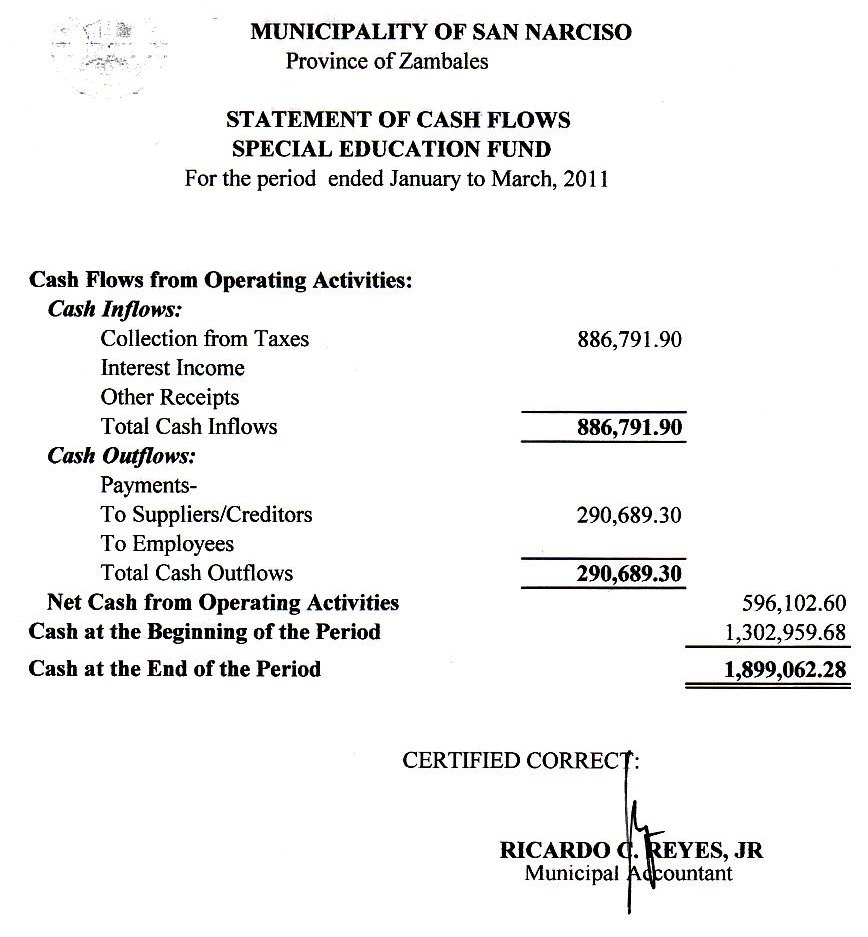
Creating this video production has been very educational and rewarding in my strategic plan for developing this website. It is very important to implement a presence on YouTube to connect to one’s audience, and it is a big advantage since so many people already use it. As promised in the video (2:22), I have attached images of examples of a balance sheet and cash flow statement below. These examples are of companies but have the same format for personal use.

This file is licensed under the Creative Commons Attribution-Share Alike 4.0 International license.
This file is licensed under the Creative Commons Attribution-Share Alike 3.0 Unported license.

A Creative Header

This week’s post is about the header, which conveys the focal point of the website. In my case, the center of interest is to sow the seeds of financial education in students for them to make educated economic decisions. The image shows a growing seedling, rising not from the soil of the earth but from the coins the represent the wealth of information that will be available to the students of Rutgers. The relation here is that the same way the plant grows, my target audience will have the ability to grow their knowledge and money with the information provided.

“Money” Photograph by Pictures of Money, provided via Flickr (Creative-Commons license).

The images I chose came from Flickr.com, and are free of copyright violations thanks to Creative Commons licenses. The production process was quite simple after reading Manovich’s article. I used Photoshop for editing, and used the techniques from the reading to merge or “layer” the images together. I also used the transparency/opacity tool to make the background image less eye-catching that way the main focus was on the image of the plant and coins.

“Three Bridges” Photograph by Marcela, provided via Flickr (Creative-Commons license).

The production process of a multi-layer image such as the one created for the header and that of a single-layer bitmap image is very different. Davidson discusses the importance of technology and “computer functionality” as they play a big role in the “production of distinct aesthetics,” (283). He goes on to say that any MS Paint user would attest that it takes great skill to make attractive images. This is very accurate as we can see from the scribbly “rage memes” shown in the article. Therefore, the main difference between the multi-layer and single-layer image production process lies on the functionality of the programs. On one hand, multi-layer images are possible to make from other photos and easily adjusted through properly named functions in Photoshop, for example, while single-layer bitmap images are just that much harder to produce in a program such as MS Paint.

Intro to Financial Proficiency

This website serves as a vehicle for financial independence. Individuals who wish to learn about personal finance will be provided with the tools required to build a stable financial future. This is a subject that we are not taught in school, or at least taught in great detail. Some people may be lucky to learn good financial habits from their parents; however, the majority of Americans struggle to make sound financial decisions.

The main goal of this website is to educate our student body here at Rutgers University about financial literacy. The purpose is to provide suitable information for students to manage their money, and to plan for the future. As an avid learner of this topic, I have read in great detail about financial planning, and I have also done similar projects in other classes. To some people, this topic can seem unimportant, boring or even unnecessary. Nevertheless, it is an affair that can greatly benefit and transform our lives. Everyone has a different socioeconomic background, but the fact is that no matter what your standard of living may be, being able to make fitting financial decisions is a life skill that will allow individuals to live better.

Image by Jill Wellington from Pixabay

The images above were retrieved from Pixabay.com, a “copyleft,” and free-to-use website dedicated to providing all sorts of media without the copyright restrictions talked about in Lawrence Lessig’s book Remix. This is a great source for finding free-to-use images, and other types of shareable media. Lessig gives a great example about Youtube being the modern equivalent to the young people singing songs in the short story of John Philip Sousa, who saw technology (“the talking machine”) as threat to the artistic development of music/artists (p. 155). Similarly, copyright laws create restrictions and prevent people from sharing with the world and contribute to the evolution of culture. As a solution to this problem Pixabay serves as a Creative Commons organization that “enables the sharing and use of creativity and knowledge through free legal tools,” (creative commons.org).

The FinPro website will be comprised of different blog posts that will discuss different topics about financial literacy. We will cover emergency funds, developing financial goals, monitoring spending, managing debt, investing for the future and preparing for retirement. Every stage of life comes with different financial challenges, but we can overcome any difficulties that we are well prepared for. That is the key objective of this site: to empower students, prepare them for life’s financial challenges and create better lives.