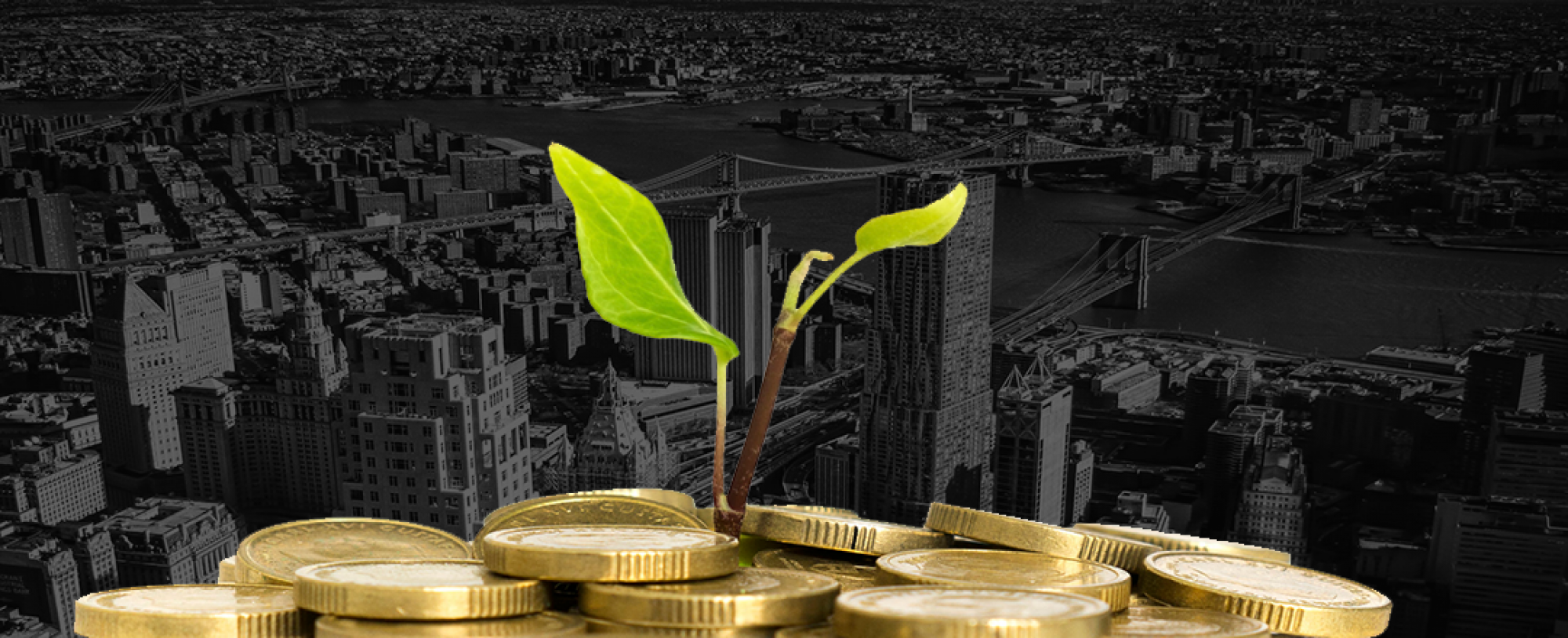
This week’s post is about the header, which conveys the focal point of the website. In my case, the center of interest is to sow the seeds of financial education in students for them to make educated economic decisions. The image shows a growing seedling, rising not from the soil of the earth but from the coins the represent the wealth of information that will be available to the students of Rutgers. The relation here is that the same way the plant grows, my target audience will have the ability to grow their knowledge and money with the information provided.

The images I chose came from Flickr.com, and are free of copyright violations thanks to Creative Commons licenses. The production process was quite simple after reading Manovich’s article. I used Photoshop for editing, and used the techniques from the reading to merge or “layer” the images together. I also used the transparency/opacity tool to make the background image less eye-catching that way the main focus was on the image of the plant and coins.

The production process of a multi-layer image such as the one created for the header and that of a single-layer bitmap image is very different. Davidson discusses the importance of technology and “computer functionality” as they play a big role in the “production of distinct aesthetics,” (283). He goes on to say that any MS Paint user would attest that it takes great skill to make attractive images. This is very accurate as we can see from the scribbly “rage memes” shown in the article. Therefore, the main difference between the multi-layer and single-layer image production process lies on the functionality of the programs. On one hand, multi-layer images are possible to make from other photos and easily adjusted through properly named functions in Photoshop, for example, while single-layer bitmap images are just that much harder to produce in a program such as MS Paint.
 Money-Grow